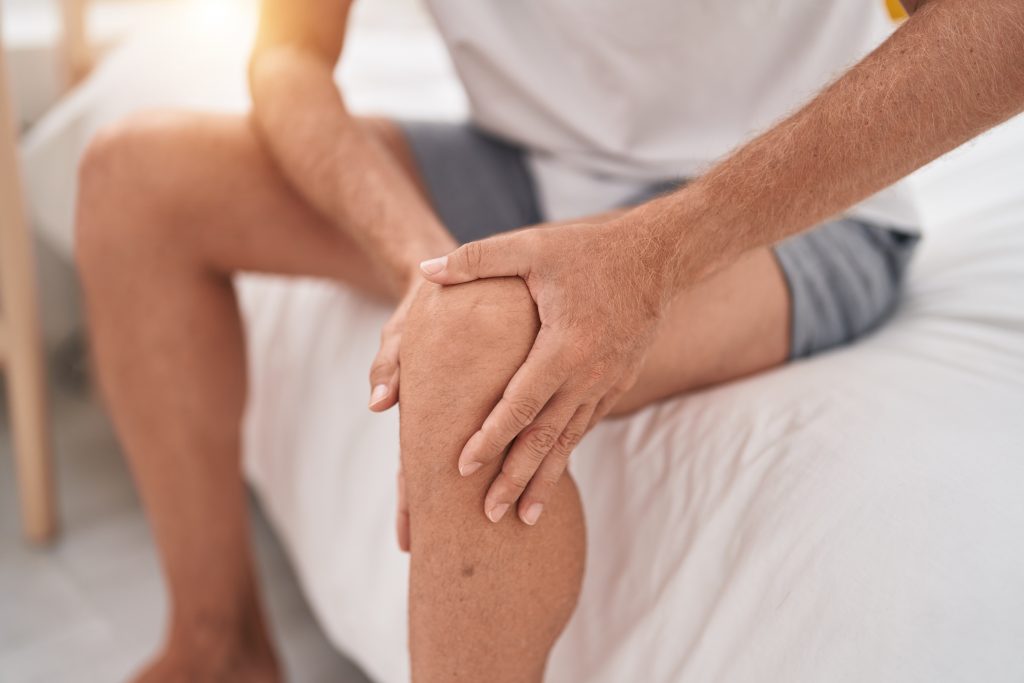
Eine Meniskusverletzung kann Folge eines (Sport)Traumas sein, sie kann aber auch (insbesondere bei älteren Menschen) bei mehr oder weniger normalen Bewegungen auftreten, ohne dass eine Verletzung vorliegt. Auf dieser Seite erfahren sie, was der Meniskus nun eigentlich ist und wieso kann ich Beschwerden davon bekommen? Muss ich operiert werden oder kann es auch konservativ behandelt werden? Was beinhaltet eine solche Rehabilitation?
ANATOMIE
Der Meniskus befindet sich mitten im Knie und liegt zwischen Oberschenkel- und Unterschenkelknochen. Er besteht aus zwei C-förmige Ringen, deren Material am ähnlichsten mit Knorpelgewebe verglichen werden kann, trotzdem aber Unterschiede aufweist. Pro Kniegelenk hat man jeweils einen inneren (medialen) und einen äußeren (lateralen) Meniskus.
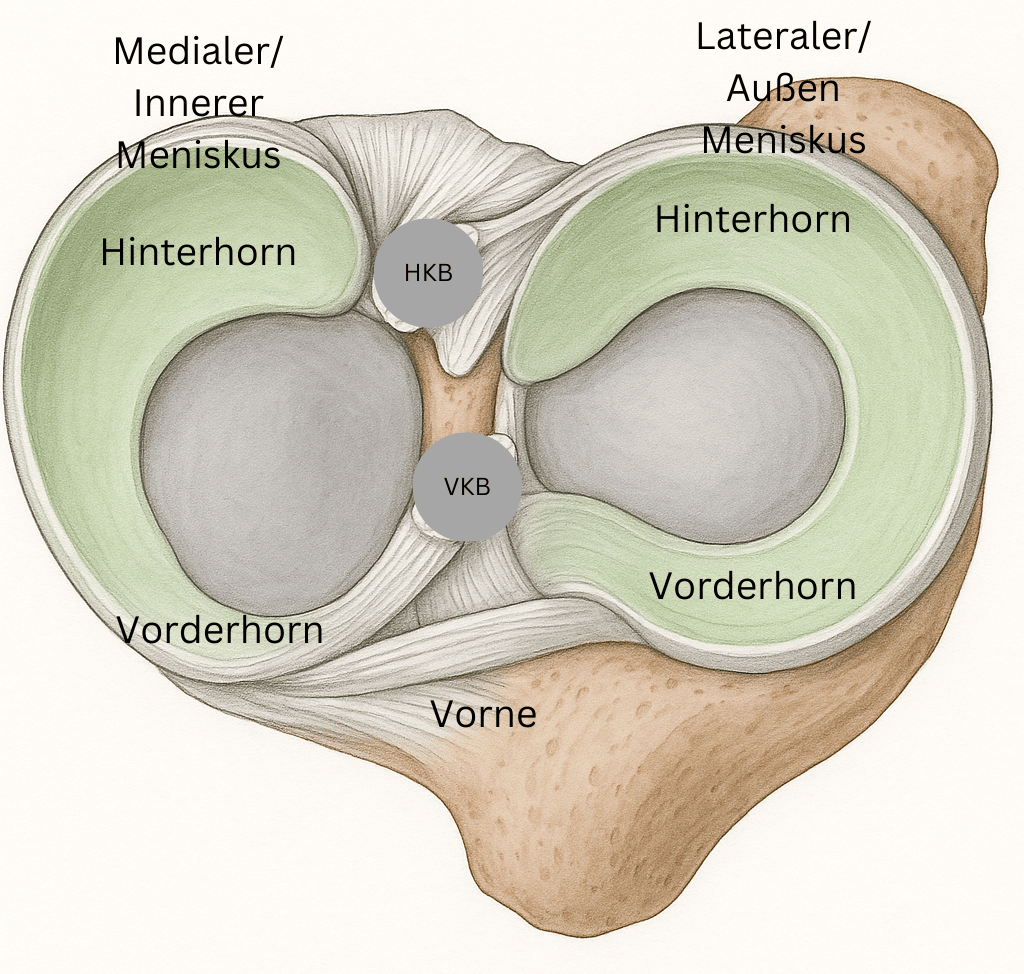
Quelle: Physio Meets Science
Weiter kann man den Meniskus in seine Durchblutungszonen unterteilen. Der äußerste Teil des Meniskus ist gut durchblutet (rote Zone) und der innerste Teil weniger bis gar nicht (weiße Zone). Die Aufgabe des Meniskus besteht darin die Ungleichmäßigkeit der zwei Gelenkpartner auszugleichen und sorgt deshalb für gleichmäßige Druckverteilung, passive Stabilität und Propriozeption (der Sinn für sich selbst, genauer: die Position der eigenen Gliedmaße und die Lage des Körpers im Raum) des Kniegelenks. Außerdem sind Menisken am Stoffwechsel des Gelenkes beteiligt und haben somit eine wichtige Funktion für die Gesundheit des Kniegelenkes.2 Die Menisken bewegen sich beim Beugen und Strecken des Knies mit.
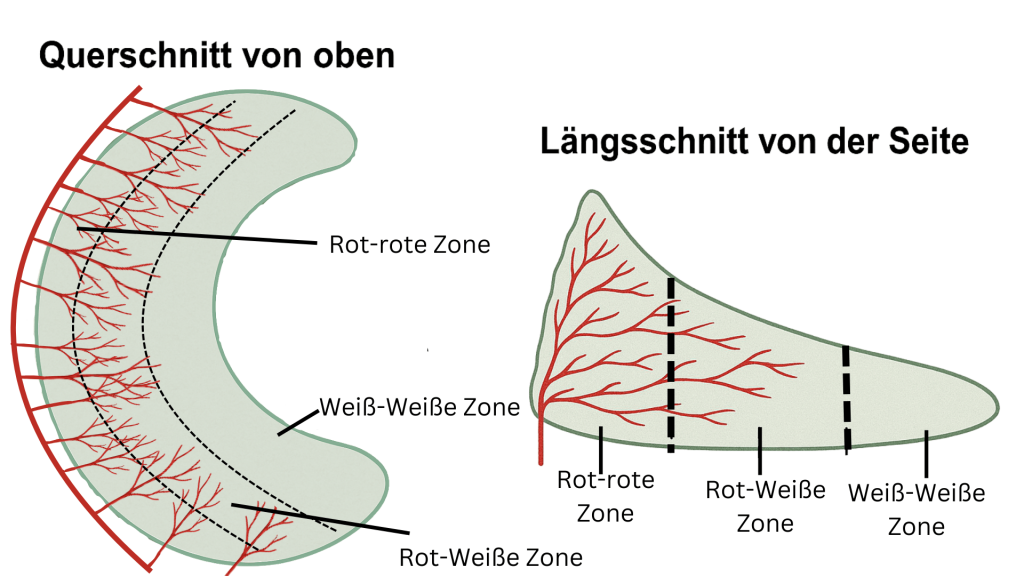
Quelle: Gesundheitsinformation
Vorab muss man klarstellen, dass Meniskusrisse nicht immer Probleme wie Schmerz und Bewegungseinschränkungen bereiten müssen. Sie gehören teilweise zum normalen Alterungsprozess dazu. So konnte man in einer Untersuchung feststellen, dass 57% der untersuchten Menschen mit Kniebeschwerden in der Schweiz Meniskusrisse aufweisen, jedoch 36% der beschwerdefreien Menschen auch Meniskusrisse aufweisen.3 In einer weiteren Studie von 116 Menschen ohne Kniebeschwerden (durchschnittliches Alter von 44 Jahren) konnte man bei 30% der untersuchten Kniegelenke Meniskusläsionen feststellen.4 Deshalb ist eine weitere Klassifikation der Meniskusschäden notwendig.
Sportbedingte / traumatische Meniskusläsion
Bei jüngeren Patienten mit Meniskusbeschwerden ist der Großteil sportbedingt. Der dabei vorliegende Verletzungsmechanismus besteht meistens aus einer Drehbewegung des Kniegelenkes, ein Überstrecken des Knies oder während Bewegungsabläufen mit großer Krafteinwirkung durch Bodenreaktionskräfte oder eventuell eines Gegenspielers.5 Dadurch kann es zu unterschiedlichen Rissformen kommen. Die häufigsten finden Sie im unteren Bild.
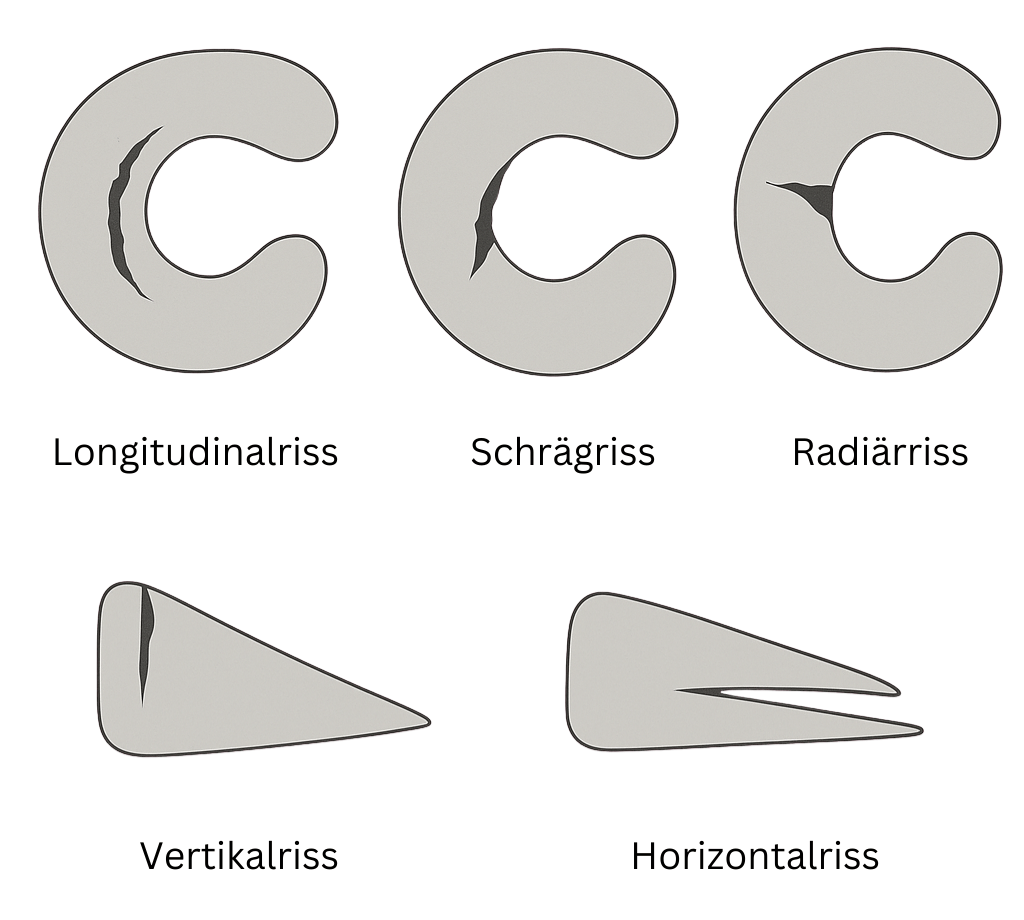
Quelle: Physio Meets Science
Bei einem Großteil der Meniskusverletzungen, kommt es gleichzeitig zum Riss des vorderen Kreuzbandes. Die Beschwerden die hierbei entstehen sind unter anderem:
- Schmerzen im Knie
- Instabilität vom Knie
- Das Gefühl, dass man das Knie weder Beugen noch Strecken kann
- Eine Schwellung des Knies
Degenerativer Meniskusriss
Diese sind häufiger bei Menschen über 50 Jahre zu beobachten und ist zu erklären durch die Veränderungen der Qualität des Meniskusgewebes. Beim Alterungsprozess des Körpers verändert sich die Qualität des gesamten Gewebes im Körper.12 Dies ist ein ganz natürlicher und unaufhaltsamer Prozess, vergleichbar mit dem Ergrauen der Haare.
Näher betrachtet wird der Meniskus etwas härter und nimmt an Flexibilität ab. Dadurch nimmt seine Funktion ab und kann deshalb schneller durch äußere Krafteinwirkungen gereizt werden und eventuell sogar zu Mikro-Traumen im Gewebe führen.12 Hier muss man sich jedoch nicht direkt Sorgen machen, da es wie bereits besprochen zum Teil des Alterungsprozess gehört und in den meisten Fällen symptomlos verläuft. 76% der MRT-Untersuchungen älterer Menschen weisen nicht-symptomatische Meniskusläsionen auf.42
Auch in der Nachbehandlung sind degenerative Meniskusrisse in erster Linie anders zu behandeln als tramatisch bedingte Risse. So zeigten mehrere wissenschaftliche Untersuchungen, dass eine Arthroskopie (Gelenkspiegelung) bei degenerativen Meniskusrissen keinen Vorteil gegenüber einer Trainingstherapie oder Placebo-Operation hat. 26,27,28
Folgende Faktoren können beim Erwerb einer Meniskusverletzung begünstigend wirken. Jedoch können nicht alle Faktoren gleichermaßen beeinflusst werden. Deshalb haben wir eine Unterteilung zwischen beeinflussbaren und nicht-beeinflussbaren Faktoren vorgenommen.
Beeinflussbare Faktoren:
- Hoher BMI / Übergewicht
- Verminderte Kraft der Knieumgebenden Muskulatur
- Häufige Knieende oder stehende Tätigkeit
- Kontaktsportarten
Teilweise oder nicht-beeinflussbare Faktoren:
- Generalisierte Gelenkhypermobilität
- Verletzungen des Knies (u.A. vordere Kreuzbandrupturen)
- Alter
- Geschlecht
Wenn man sich das Knie verletzt, möchte man natürlich schnell und sicher wissen ob eventuelle Schäden wie zum Beispiel am Meniskus passiert sind. Um mehr Deutlichkeit zu erlangen, sollten Sie bei einem Gesundheitsspezialisten wie zum Beispiel in unserer Physioakutsprechstunde vorstellig werden. Ein fundamentaler Grundstein in der Untersuchung ist die Vorgeschichte zum Problem, zusammen mit den von ihnen gewonnen Informationen können wir uns ein besseres Bild von der aktuellen Situation schaffen und im weiteren Therapievorgehen miteinbeziehen. Unmittelbar danach findet eine individuelle Untersuchung des Kniegelenks statt. In diesem Fall werden mehrere provokative Tests durchgeführt, die den bekannten Schmerzen / Problem auslösen sollen. Eine Kombination aus Bildgebung, klinischen Tests und Anamnese kann am genauesten zu einer Diagnose führen. Meniskusrisse im MRT sind aber häufig auch Zufallsbefunde, die ohne akutes Trauma nicht unbedingt mit Schmerz und Funktionseinschränkungen in Zusammenhang stehen müssen. 6, 7
Es gibt einen Zusammenhang zwischen Größe und Ort des Risses und der Schmerzintensität und Kniefunktion.
Es hört sich erstmal logisch an, dass Risse, welche in Rissmuster, Rissgröße und Rissort variieren auch unterschiedlich stark, in Abhängigkeit davon, Schmerzen sollten. Jedoch besteht bei degenerativen Meniskusrissen kein Zusammenhang zwischen diesen Faktoren und Schmerzintensität oder Kniefunktion. Die Schmerzen treten meistens aufgrund von frühen degenerativen Veränderungen im Knie (wobei das Meniskusgewebe nicht ausgeschlossen ist) und einer Arthrose im Kniegelenk auf. 14
Ein Blockierungsgefühl im Kniegelenk ist ein Meniskusriss.
Noch vor wenigen Jahren wurde eine Blockierung des Knies und ein einschießender Schmerz mit einem Meniskusriss gleichgesetzt. Allerdings zeigen Untersuchungen dass Blockierungen des Kniegelenks oder Streckdefizite bei Meniskusrissen genauso häufig auftreten, wie bei Patienten mit Kniebeschwerden ohne Meniskusriss.11 Blockierungen im Knie müssen also nicht unbedingt mit einem Meniskusriss zusammenhängen.
Eine der schwierigsten Fragen, die sich nach solch einer Verletzung stellt, ist ob man sich operieren lässt oder nicht. Unser Rat deshalb: Es hängt davon ab. Der Orthopäde und der Physiotherapeut, wird ihnen Ratschläge für ihre weitere Genesung geben, aber letztendlich liegt die Entscheidung für eine Operation bei ihnen.
Grundsätzlich sollte mit einem konservativen Behandlungsansatz begonnen werden, da der wissenschaftliche Stand keine bedeutende Überlegenheit einer Operation zur Trainingstherapie sieht.15, 16, 17, 18, 19, 20, 21 Da jedoch, wie oben geschildert, nur der äußere Ring des Menisken durchblutet wird, ist auch nur dieser in der Lage optimal zu heilen. Bei komplexen, chronischen oder degenerativen Meniskusverletzungen ist die Heilung erschwert.39,40 Trotzdem kann man auch bei Rissen in der nicht-durchbluteten Zone, Heilungsprozesse beobachten welche funktionell auch gute Ergebnisse liefern. Grund für die Heilung trotz nicht-durchbluteter Situation ist, dass es in dieser Zone Stammzellen gibt, welche Reparaturprozesse durchführen können. 47
Aus einer brandaktuellen Studie an der 121 jüngere Patienten mit traumatischen Meniskusrissen teilnahmen, kamen 74% der konservative behandelten Patienten aus der Trainingsgruppe ohne eine Meniskusoperation nach 12 Monaten aus. Auch in Hinblick auf Schmerz, Funktion und Lebensqualität waren zwischen der Operationgruppe und Trainingsgruppe keine relevanten Unterschiede messbar. Was deshalb stark für einen primär konservativen Behandlungsversuch spricht, mit der Option bei nicht erwünschtem Ergebnis sich immer noch operieren lassen zu können. 29
OPERATIONSARTEN
Sollten sie sich für eine Operation entscheiden, gibt es verschiedene Operationsarten, die bei einem Meniskusriss eingesetzt werden können. Hier unten listen wir die gängigsten Operationsarten auf und schauen uns jeweils an, wie die aktuelle wissenschaftliche Evidenzlage dazu aussieht und in welchen Fällen diese Operationsart in Frage kommen. Beurteilt wird immer anhand folgender Kriterien:
- Rissform und -länge
- Lokalisation (Rot-rote Zone, Weiß-rote Zone, Weiß-weiße Zone)
- Qualität des Meniskusgewebes (Alter des Patienteen spielt hier eine große Rolle)
- Akute Verletzung oder degenerative Prozesse
Meniskusrefixation
Es wird unterschieden zwischen Inside-Out, Outside-In und All-Inside Techniken, die abhängig von der Lokalisation des Risses gewählt werden. Diese Techniken sind verschiedene Nähte, die alle arthroskopisch (mittels einer Gelenkspiegelung) durchgeführt werden. Anstelle der Nahttechniken können auch resorbierbare Pfeile oder Anker (lösen sich nach 3 Monaten komplett auf) verwendet werden. Studien weisen jedoch keine signifikante Unterschiede zwischen den Resultaten dieser verschiedenen Techniken auf. 52, 53 Diese Techniken haben die Zielsetzung, die Operationszeit zu minimieren, die Operation so unkompliziert wie möglich zu machen und so wenig zusätzlichen Schäden wie möglich im Gewebe zu verursachen. Am meisten in Frage für diese Techniken kommen akute Verletzungen in Form von Längrissen in der gut durchbluteten Zone, bei jüngeren Patienten. Degenerative Meniskusrisse kommen hier nicht für in Frage. 52, 53
Wrapping
Bei dieser Technik wird der Riss arthroskopisch (mittels einer Gelenkspiegelung) mit einer Matrix aus kollagenen Fasern ummantelt. Mit zwei biegsamen Nadeln, die mit einem Faden verbunden sind, werden die Matrix und das Meniskusgewebe stabil an der Gelenkkapsel befestigt. Aus dem Unterschenkel Knochen wird zudem Knochenmark entnommen, welches in diese Ummantelung injiziert wird, oder es wird ein nicht mit Knorpel überzogener Teil des Oberschenkelknochens angebohrt, aus dem Knochenmarkflüssigkeit ins Gelenk fließen kann. In dieser Flüssigkeit befinden sich Wachstumsfaktoren und Stammzellen, die die Heilung des geschädigten Meniskusgewebes unterstützen sollen. 52 Diese Technik kommt in Frage für Meniskusverletzungen, bei denen eine Naht oder andere Refixationstechniken nicht möglich sind oder nicht erfolgreich waren. Risse in schlecht oder gar nicht durchbluteten Zonen oder sehr komplexe Risse können hiermit behandelt werden. 52
Ausschabung und Abschälen
Das Abschälen der obersten Schicht des Meniskus und eine Ausschabung des Risses soll Heilungsprozesse fördern. Das Abschälen soll Chondrozyten stimulieren, die wiederum dafür sorgen, dass wichtige Proteine ausgeschüttet werden und metabole Prozesse stattfinden, die die Heilung anregen. Durchgeführte Studien weisen gute Ergebnisse auf für Schmerz, Symptome, Einschränkungen und den Sporteinstieg. 38 Die Technik kommt vor allem in Frage bei Meniskus Schäden, die in der gut durchbluteten Zone gelegen sind und bei jungen Patienten. 52
Meniskusteilresektion
Die Meniskusteilresektion wird arthroskopisch durchgeführt. Dabei wird das beschädigte Gewebe herausgeschnitten. Die Meniskusteilresektion kommt in Frage bei degenerativen Meniskusrissen und Rissen bei denen eine Refixation nicht möglich ist. Ziel ist es, so wenig Gewebe wie möglich und so viel wie nötig zu entfernen und somit das Fortschreiten von degenerativen Veränderungen vorzubeugen.
Meniskektomie
Hierunter ist das Herausschneiden des ganzen Meniskus, bei komplexen Meniskusrissen in schlecht durchbluteten Zonen, zu verstehen. Dieses Verfahren führt zu einer beschleunigten Gelenksabnutzung, durch die fehlende Druckverminderung und Gelenkstabilität und somit zu Arthrose. 25, 26 Aktuell ist deutlich geworden, wie wichtig der Meniskus für die Funktion des Kniegelenks ist und daher immer so viel wie möglich des Meniskus erhalten bleiben soll. 25 Daher wird eine Meniskusreparatur der Entfernung wenn möglich immer vorgezogen.
Meniskus Allograft Transplantation
Eine Meniskus Allograft Transplantation beschreibt die Transplantation eines fremden Meniskus eines Menschen. Diese Prozedur wird bei Patienten mit langanhaltenden Schmerzen und Einschränkungen, trotz vorangegangener Meniskektomie, durchgeführt. Dabei darf der Patient aufgrund arthrotischer Veränderungen im Knie meist nicht älter als 45 bis 55 Jahre sein. Des weiteren darf der Patient nicht über eine Gelenksentzündung gelitten haben, Arthritis im Knie verfügen oder einen BMI höher als 30 haben. Die Alternative dazu ist in der Regel eine Knieprothese. Diese Transplantate werden in der Regel gut vom Körper angenommen, aber da dieses Verfahren nicht oft durchgeführt wird, ist die Evidenz dafür gering.37
Wie bei jedem unserer (neuen) Patienten, erwartet sie zu Beginn der ersten Therapiesitzung ein ausführliches Anamnesegespräch mit einem unserer Therapeuten, um für die Therapie relevante Information zu evaluieren und mögliche Kontraindikationen oder sogenannte „Red Flags“ auszuschließen. Danach wird eine gründliche Untersuchung durch den Therapeuten vorgenommen, um den aktuellen Rehabilitationsstand genauestens festlegen zu können. Zudem wird gemeinsam mit dem Patienten ein individuelles Anforderungsprofil erstellt, welches speziell auf die täglichen Anforderungen im Leben des Patienten abgestimmt ist. Ziel ist es, einen klar objektiv definierten IST-Standpunkt zu gestalten und mittels erster Planungen den zu erreichenden Soll-Stand zu formulieren. Dieser Weg wird durch den Transfer der Therapie stattfinden und laufend neu motorisiert und evaluiert, um zu jedem Zeitpunkt über den aktuellen Leistungszustand des Patienten informiert zu sein.
Um diese Art der Methodik noch effizienter zu gestalten und das volle Potenzial aus der Behandlung schöpfen zu können, bieten wir ihnen optional die Möglichkeit der erweiterten Therapiezeit an. Ziel dieser Zusatzleistung ist es, unser Behandlungspotential voll auszuschöpfen, eine qualitativ hochwertige Therapie zu garantieren und damit das Therapieergebnis zu optimieren. Durch das erweiterte Konzept können unsere Therapeuten deshalb noch effizienter an dem Therapieprozess arbeiten.
Wie gestaltet sich die Rehabilitation nach einer Meniskusverletzung?
Je nach Art und Weise der Meniskusreparatur oder (Teil-)Entfernung ist die Dauer der Rehabilitation davon abhängig. Bei der Frage wie schnell und weit man das Knie nach einer Operation wieder belasten und voll bewegen kann, ist die Evidenz sehr unterschiedlich. Individuelle Faktoren, sowie Rissmuster und Fixationsart haben einen großen Einfluss auf die Belastungssteigerung und sollten im Therapiegeschehen miteinbezogen werden.30 Jedoch konnten Studien mehrfach widerlegen, dass ein frühes Bewegen und schmerzabhängiges Belasten keine schlechteren Ergebnisse liefert und auch nicht häufiger zum Versagen des genähten Meniskus führt als ein limitiertes Vorgehen der Bewegung und Belastung bei isolierten Meniskusverletzungen.31,32,33,34 Im Hinblick auf die Gesunderhaltung anderer Kniegewebearten wie des Knorpels, sind Gelenkbelastungen zwingend notwendig, um die Versorgung des Knorpels aufrecht zu erhalten. Gelenkentlastungen zeigen eine schädliche Wirkung für die Knorpelgesundheit.35,36 Um Wundheilungsprozesse zu unterstützen und optimale Stoffwechselvorgänge zu kreieren setzen wir auf eine frühre, schmerzabhängige Belastung welche im Laufe der Rehabilitation progressiv gesteigert wird.
Rehabilitation bei konservativen (nicht-operativen) Vorangehen
Wie sie im vorherigen Text erfahren haben, wird ein Großteil der Meniskusverletzungen vorerst ohne Operationsverfahren behandelt. Dabei wird die gleiche Vorgehensweise angewendet wie nach einer Operation. Vorteil der konservativen Methode jedoch ist, dass im Vergleich zur Operation meist die (Trainings)Belastung schneller wieder gesteigert werden kann und ein zurückkehren in den Sport dadurch schneller möglich wird. Begründet wird dies dadurch, dass bei einer Operation ein gewisser Grad an Schaden verursacht wird, der einen erneuten Heilungsprozess mit sich zieht, weshalb es zur Ausdehnung der Rehazeit kommen kann.
Rehabilitation im Phasen-Modell
Im unten aufgeführten Phasen-Modell sind die einzelnen Zielsetzungen der Rehabilitation an Phasen gekoppelt. Das Modell beschreibt zudem grob die Steigerung von einer niedrigen Intensität zu einer hohen Intensität und somit auch die Belastbarkeit des Sportlers
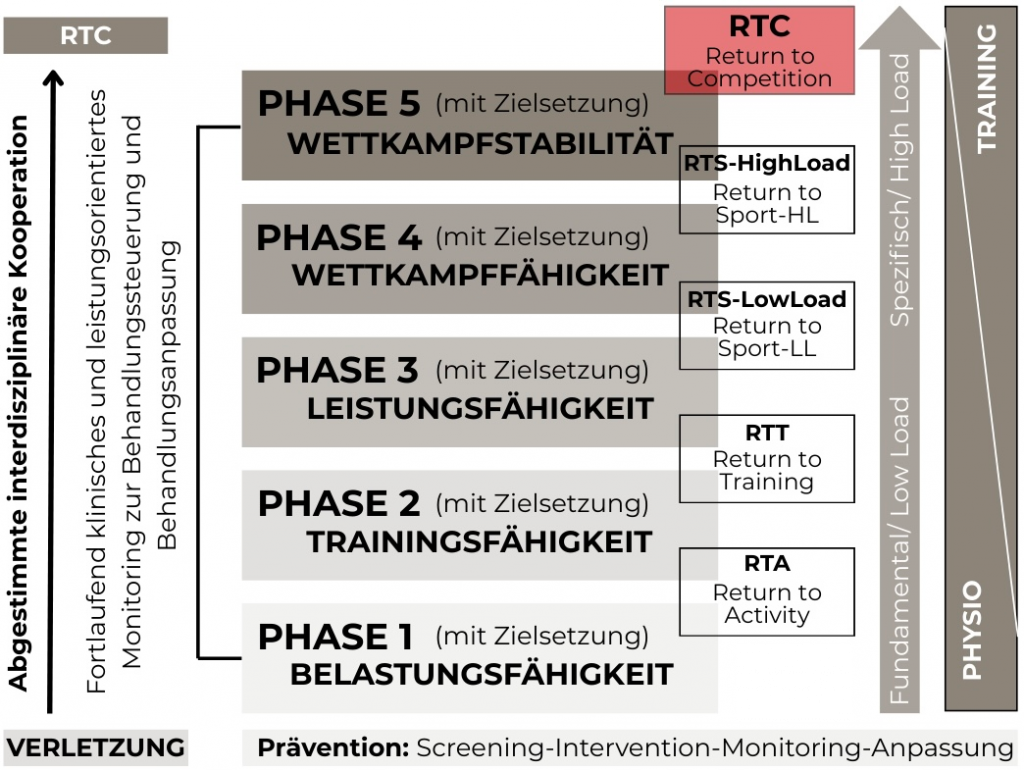
Kriterienbasierte vs zeitbasierte Rehabilitation
Grundsätzlich sind Rehabilitationspläne nichts Schlechtes, sie verhelfen zu einer Übersicht, über den groben Verlauf der Reha. Jedoch gibt es einige Nachteile von allgemeinen zeitbasierten Behandlungsplänen, welche wir euch gerne näher erklären würden:
- Zeitbasiertes Voranschreiten:
- Berücksichtigen oftmals nur die unmittelbare Zeit nach der OP/Verletzung. Jedoch dauert der Rehabilitationsprozess wesentlich länger, wofür die meisten zeitbasierten Pläne nicht ausgelegt sind.
- Beinhalten Heilungszeiten wie sie im Lehrbuch stehen. Diese weichen jedoch stark von Patient zu Patient ab. Gründe dafür sind externe und interne Unterschiede, wie z.B. die allgemeine körperliche Verfassung, Übergewicht, Trainingszustand, Motivation, Nebenerkrankungen, Immunfunktion, etc. Auch externe Umweltfaktoren beeinflussen die Wundheilung. Dazu gehören Stress, Ernährung, Schlafqualität und -quantität und Lebensstil.
- Jeder Patient bekommt den gleichen Plan. Hierdurch werden die individuellen Faktoren nicht berücksichtigt.
- Kriterienbasiertes Voranschreiten:
- Schreitet erst nach erreichen verschiedener Meilensteine voran, jedoch müssen typische Heilungszeiten natürlich berücksichtigt werden, denn schneller als optimal geht nicht!
- Messbarkeit des aktuellen Leistungsstandes des Patienten wodurch ein frühzeitiges Erkennen von Schwachpunkten möglich ist und dies somit gleichzeitig auch zur Prävention dient.
- Für unterschiedliche Verletzungs- und Beschwerdetypen sind auch unterschiedliche Rehabilitationsprogramme notwendig. Die kriterienbasierte Rehabilitation lässt sich dadurch auf jede Verletzungsart übertragen und sorgt für ein engmaschiges Monitorisieren des aktuellen Leistungszustandes.
Daraus ziehen wir den Entschluss, dass eine zeitbasierte Reha nicht mehr zeitgemäß ist, da diese zu viele Faktoren nicht berücksichtigt und den Patienten nicht als Individuum sieht.
QUELLENANGABE
- Henke, T., Gläser, H., & Heck, H. (2000). Sportverletzungen in Deutschland-Basisdaten, Epidemiologie, Prävention, Risikosportarten, Ausblick. ALT, W., SCHAFF, P., SCHUMANN, H.: Neue Wege zur Unfallverhütung im Sport-Beiträge zum Dreiländerkongress“ Mit Sicherheit mehr Spaß-Neue Wege zur Unfallverhütung“. Köln, 303-8.
- Makris, E. A., Hadidi, P., & Athanasiou, K. A. (2011). The knee meniscus: structure–function, pathophysiology, current repair techniques, and prospects for regeneration. Biomaterials, 32(30), 7411-7431.
- Zanetti, M., Pfirrmann, C. W., Schmid, M. R., Romero, J., Seifert, B., & Hodler, J. (2005). Clinical course of knees with asymptomatic meniscal abnormalities: findings at 2-year follow-up after MR imaging–based diagnosis. Radiology, 237(3), 993-997.
- Horga, L. M., Hirschmann, A. C., Henckel, J., Fotiadou, A., Di Laura, A., Torlasco, C., … & Hart, A. J. (2020). Prevalence of abnormal findings in 230 knees of asymptomatic adults using 3.0 T MRI. Skeletal radiology, 49(7), 1099-1107.
- Noyes, F. R., & Barber-Westin, S. D. (2017). Meniscus tears: diagnosis, repair techniques, and clinical outcomes. In Noyes‘ knee disorders: surgery, rehabilitation, clinical outcomes (pp. 677-718). Elsevier.
- Horga, L. M., Hirschmann, A. C., Henckel, J., Fotiadou, A., Di Laura, A., Torlasco, C., … & Hart, A. J. (2020). Prevalence of abnormal findings in 230 knees of asymptomatic adults using 3.0 T MRI. Skeletal radiology, 49(7), 1099-1107.
- Culvenor, A. G., Øiestad, B. E., Hart, H. F., Stefanik, J. J., Guermazi, A., & Crossley, K. M. (2019). Prevalence of knee osteoarthritis features on magnetic resonance imaging in asymptomatic uninjured adults: a systematic review and meta-analysis. British journal of sports medicine, 53(20), 1268-1278.
- Felson, D., Rabasa, G., Jafarzadeh, S. R., Nevitt, M., Lewis, C. E., Segal, N., & White, D. K. (2021). Factors associated with pain resolution in those with knee pain: the MOST study. Osteoarthritis and Cartilage, 29(12), 1666-1672.
- Angelozzi, M., Madama, M., Corsica, C., Calvisi, V., Properzi, G., McCaw, S. T., & Cacchio, A. (2012). Rate of force development as an adjunctive outcome measure for return-to-sport decisions after anterior cruciate ligament reconstruction. journal of orthopaedic & sports physical therapy, 42(9), 772-780.
- Thorlund, J. B., Juhl, C. B., Ingelsrud, L. H., & Skou, S. T. (2018). Risk factors, diagnosis and non-surgical treatment for meniscal tears: evidence and recommendations: a statement paper commissioned by the Danish Society of Sports Physical Therapy (DSSF). British Journal of Sports Medicine, 52(9), 557-565.
- Schwellnus, M., Soligard, T., Alonso, J. M., Bahr, R., Clarsen, B., Dijkstra, H. P., … & Engebretsen, L. (2016). How much is too much?(Part 2) International Olympic Committee consensus statement on load in sport and risk of illness. British journal of sports medicine, 50(17), 1043-1052.
- Englund, M., Guermazi, A., Gale, D., Hunter, D. J., Aliabadi, P., Clancy, M., & Felson, D. T. (2008). Incidental meniscal findings on knee MRI in middle-aged and elderly persons. New England Journal of Medicine, 359(11), 1108-1115.
- Daniel, D. A. L. E., Daniels, E. R. I. C., & Aronson, D. A. V. I. D. (1982). The diagnosis of meniscus pathology. Clinical orthopaedics and related research, (163), 218-224.
- Tornbjerg, S. M., Nissen, N., Englund, M., Jørgensen, U., Schjerning, J., Lohmander, L. S., & Thorlund, J. B. (2017). Structural pathology is not related to patient-reported pain and function in patients undergoing meniscal surgery. British journal of sports medicine, 51(6), 525-530.
- Lee, S. H., Lee, O. S., Kim, S. T., & Lee, Y. S. (2020). Revisiting arthroscopic partial meniscectomy for degenerative tears in knees with mild or no osteoarthritis: a systematic review and meta-analysis of randomized controlled trials. Clinical Journal of Sport Medicine, 30(3), 195-202.
- Palmer, J. S., Monk, A. P., Hopewell, S., Bayliss, L. E., Jackson, W., Beard, D. J., & Price, A. J. (2019). Surgical interventions for symptomatic mild to moderate knee osteoarthritis. Cochrane Database of Systematic Reviews, (7).
- Ma, J., Chen, H., Liu, A., Cui, Y., & Ma, X. (2020). Medical exercise therapy alone versus arthroscopic partial meniscectomy followed by medical exercise therapy for degenerative meniscal tear: a systematic review and meta-analysis of randomized controlled trials. Journal of orthopaedic surgery and research, 15(1), 1-11.
- Talman, P., Duong, T., Vucic, S., Mathers, S., Venkatesh, S., Henderson, R., … & Kiernan, M. (2016). Identification and outcomes of clinical phenotypes in amyotrophic lateral sclerosis/motor neuron disease: Australian National Motor Neuron Disease observational cohort. BMJ open, 6(9), e012054.
- Siemieniuk, R. A., Harris, I. A., Agoritsas, T., Poolman, R. W., Brignardello-Petersen, R., Van de Velde, S., … & Kristiansen, A. (2017). Arthroscopic surgery for degenerative knee arthritis and meniscal tears: a clinical practice guideline. Bmj, 357.
- Thorlund, J. B. (2017). Deconstructing a popular myth: why knee arthroscopy is no better than placebo surgery for degenerative meniscal tears. British Journal of Sports Medicine, 51(22), 1630-1631.
- Rathcke, M. W., Lind, M., Boesen, M. I., Nissen, N., Boesen, A. P., Mygind-Klavsen, B., & Hölmich, P. (2017). Treatment of meniscal pathology. Ugeskrift for Laeger, 179(38).
- Thorlund, J. B., Juhl, C. B., Roos, E. M., & Lohmander, L. S. (2015). Arthroscopic surgery for degenerative knee: systematic review and meta-analysis of benefits and harms. bmj, 350.
- Abram, S. G., Hopewell, S., Monk, A. P., Bayliss, L. E., Beard, D. J., & Price, A. J. (2020). Arthroscopic partial meniscectomy for meniscal tears of the knee: a systematic review and meta-analysis. British journal of sports medicine, 54(11), 652-663.
- Ciemniewska-Gorzela, K., Bąkowski, P., Naczk, J., Jakob, R., & Piontek, T. (2021). Complex meniscus tears treated with collagen matrix wrapping and bone marrow blood injection: clinical effectiveness and survivorship after a minimum of 5 years’ follow-up. Cartilage, 13(1_suppl), 228S-238S.
- Piontek, T., Ciemniewska-Gorzela, K., Naczk, J., Jakob, R., Szulc, A., Grygorowicz, M., & Slomczykowski, M. (2016). Complex meniscus tears treated with collagen matrix wrapping and bone marrow blood injection: a 2-year clinical follow-up. Cartilage, 7(2), 123-139.
- Øiestad, B. E., Holm, I., Engebretsen, L., & Risberg, M. A. (2011). The association between radiographic knee osteoarthritis and knee symptoms, function and quality of life 10–15 years after anterior cruciate ligament reconstruction. British journal of sports medicine, 45(7), 583-588.
- Thorlund, J. B., Juhl, C. B., Roos, E. M., & Lohmander, L. S. (2015). Arthroscopic surgery for degenerative knee: systematic review and meta-analysis of benefits and harms. bmj, 350.
- Siemieniuk, R. A., Harris, I. A., Agoritsas, T., Poolman, R. W., Brignardello-Petersen, R., Van de Velde, S., … & Kristiansen, A. (2017). Arthroscopic surgery for degenerative knee arthritis and meniscal tears: a clinical practice guideline. Bmj, 357.
- Abram, S. G., Hopewell, S., Monk, A. P., Bayliss, L. E., Beard, D. J., & Price, A. J. (2020). Arthroscopic partial meniscectomy for meniscal tears of the knee: a systematic review and meta-analysis. British journal of sports medicine, 54(11), 652-663.
- Skou, S. T., Hölmich, P., Lind, M., Jensen, H. P., Jensen, C., Garval, M., & Thorlund, J. B. (2022). Early Surgery or Exercise and Education for Meniscal Tears in Young Adults. NEJM Evidence, 1(2), EVIDoa2100038.
- Beaufils, P., & Verdonk, R. (Eds.). (2010). The meniscus. Springer Science & Business Media.
- Lind, M., Nielsen, T., Faunø, P., Lund, B., & Christiansen, S. E. (2013). Free rehabilitation is safe after isolated meniscus repair: a prospective randomized trial comparing free with restricted rehabilitation regimens. The American journal of sports medicine, 41(12), 2753-2758.
- Perkins, B., Gronbeck, K. R., Yue, R. A., & Tompkins, M. A. (2018). Similar failure rate in immediate post-operative weight bearing versus protected weight bearing following meniscal repair on peripheral, vertical meniscal tears. Knee Surgery, Sports Traumatology, Arthroscopy, 26(8), 2245-2250.
- O’Donnell, K., Freedman, K. B., & Tjoumakaris, F. P. (2017). Rehabilitation protocols after isolated meniscal repair: a systematic review. The American journal of sports medicine, 45(7), 1687-1697.
- VanderHave, K. L., Perkins, C., & Le, M. (2015). Weightbearing versus nonweightbearing after meniscus repair. Sports Health, 7(5), 399-402.
- Owman, H., Tiderius, C. J., Ericsson, Y. B., & Dahlberg, L. E. (2014). Long-term effect of removal of knee joint loading on cartilage quality evaluated by delayed gadolinium-enhanced magnetic resonance imaging of cartilage. Osteoarthritis and cartilage, 22(7), 928-932.
- Vanwanseele, B., Lucchinetti, E., & Stüssi, E. (2002). The effects of immobilization on the characteristics of articular cartilage: current concepts and future directions. Osteoarthritis and Cartilage, 10(5), 408-419.
- Southworth, T. M., Naveen, N. B., Tauro, T. M., Chahla, J., & Cole, B. J. (2020). Meniscal allograft transplants. Clinics in sports medicine, 39(1), 93-123.
- Tetik, O., Kocabey, Y., & Johnson, D. L. (2002). Synovial abrasion for isolated, partial thickness, undersurface, medial meniscus tears. Orthopedics, 25(6), 675-678.
- Angel, M. J., Kerker, J., & Sgaglione, N. (2009). Meniscus repair and future directions. In Knee Arthroscopy (pp. 25-40). Springer, New York, NY.
- Pereira, H., Cengiz, I. F., Silva-Correia, J., Ripoll, P. L., Varatojo, R., Oliveira, J. M., … & Espregueira-Mendes, J. (2016). Meniscal repair: indications, techniques, and outcome. In Arthroscopy (pp. 125-142). Springer, Berlin, Heidelberg.
- Henke, T. (2003). Sportunfälle (Gesundheitsberichte NRW, Bd 1) Bielefeld: lödg.
- Wirtz, D. C. (2013). Orthopädie und Unfallchirurgie essentials: Intensivkurs zur Weiterbildung (pp. 338-340). S. Ruchholtz (Ed.). Thieme.
- Schneider, O., Scharf, H. P., Stein, T., Knapstein, S., Hermann, C., & Flechtenmacher, J. (2016). Incidence of knee injuries: Numbers for outpatient and inpatient care in Germany. Der Orthopade, 45(12), 1015-1026.
- Goossens, P., Keijsers, E., Van Geenen, R. J., Zijta, A., Van den Broek, M., Verhagen, A. P., & Scholten-Peeters, G. G. (2015). Validity of the Thessaly test in evaluating meniscal tears compared with arthroscopy: a diagnostic accuracy study. journal of orthopaedic & sports physical therapy, 45(1), 18-24.
- Konan, S., Rayan, F., & Haddad, F. S. (2009). Do physical diagnostic tests accurately detect meniscal tears?. Knee Surgery, Sports Traumatology, Arthroscopy, 17(7), 806-811.
- Dzoleva-Tolevska, R., Poposka, A., Samardziski, M., & Georgieva, D. (2013). Comparative analysis of diagnostic methods in meniscal lesions. Pril, 34, 79-83.
- Hohmann, E. (2021). Editorial Commentary: Discovery: Progenitor Cells and Endothelial Cells Are Found in the White-White Zone of the Meniscus, But This Does Not Mean That These Tears Heal or Should Be Repaired. Arthroscopy: The Journal of Arthroscopic & Related Surgery, 37(1), 266-267.
- Cosgarea, A. J., Sebastianelli, W. J., & DeHaven, K. E. (1995). Prevention of arthrofibrosis after anterior cruciate ligament reconstruction using the central third patellar tendon autograft. The American journal of sports medicine, 23(1), 87-92.
- Lepley, L. K. (2015). Deficits in quadriceps strength and patient-oriented outcomes at return to activity after ACL reconstruction: a review of the current literature. Sports health, 7(3), 231-238.
- Paulos, L., Noyes, F. R., Grood, E., & Butler, D. L. (1991). Knee rehabilitation after anterior cruciate ligament reconstruction and repair. Journal of Orthopaedic & Sports Physical Therapy, 13(2), 60-70.
- Quelard, B., Sonnery-Cottet, B., Zayni, R., Badet, R., Fournier, Y., Hager, J. P., & Chambat, P. (2010). Isolated posterior cruciate ligament reconstruction: Is non-aggressive rehabilitation the right protocol?. Orthopaedics & Traumatology: Surgery & Research, 96(3), 256-262.
- Stärke, C., Kopf, S., Petersen, W., & Becker, R. (2009). Meniscal repair. Arthroscopy: The Journal of Arthroscopic & Related Surgery, 25(9), 1033-1044.
- Chevrier, A., Farr, J., Rodeo, S. A., & Buschmann, M. D. (2018). Augmentation techniques for meniscus repair. The journal of knee surgery, 31(01), 099-116.